


















If you've ever been curious about BDSM but found yourself overwhelmed by stereotypes, you're not alone. Television, movies, and social media often portray kink as extreme, dangerous, or only for a select few. The reality is very different.
Healthy BDSM is built on communication, trust, consent, and mutual enjoyment. Whether you're simply curious or ready to take your first steps into the kink community, understanding the facts can help you make informed decisions and enjoy a safer, more fulfilling experience.
Here are 15 of the biggest myths about BDSM—and the truth behind them.

1. BDSM Is All About Pain
This is probably the biggest misconception.
While some people enjoy pain play, BDSM encompasses a huge range of activities, including:
- Bondage
- Sensory play
- Dominance and submission
- Roleplay
- Power exchange
- Impact play
- Service dynamics
- Psychological play
Many couples never include pain at all.
2. BDSM Means Someone Gets Hurt
Healthy BDSM is based on enthusiastic, informed consent.
Participants negotiate boundaries beforehand, establish safe words, and check in throughout a scene. The goal is enjoyment—not harm.
Communication before, during, and after play is considered essential.

3. Only Certain Types of People Enjoy Kink
People from every profession, age group, relationship style, gender identity, and sexual orientation participate in BDSM.
Doctors, teachers, business owners, engineers, artists, parents, and retirees all exist within the kink community.
There isn't a "typical" kinky person.
4. Dominants Are Controlling in Everyday Life
Being dominant in a BDSM scene doesn't necessarily reflect someone's personality outside of it.
Many Dominants are caring, patient, and collaborative in daily life. Likewise, many submissives are confident professionals who simply enjoy surrendering control in negotiated situations.
Roles are contextual—not personality tests.
5. Submissives Have No Power
Ironically, submissives often have significant control.
They decide:
- Their limits
- Their hard boundaries
- Their safe words
- What activities they're willing to explore
Without their ongoing consent, a scene stops.
6. You Need Expensive Equipment
Hollywood loves elaborate dungeons filled with specialist gear.
In reality, beginners often start with:
- Silk scarves
- Soft cuffs
- Blindfolds
- Feathers
- Massage candles designed for body use
- Simple paddles
Experience and communication matter far more than owning expensive toys.
7. Safe Words Kill the Mood
Most experienced players would argue the opposite.
Knowing everyone can immediately stop or slow things down creates trust, allowing both partners to relax and enjoy themselves.
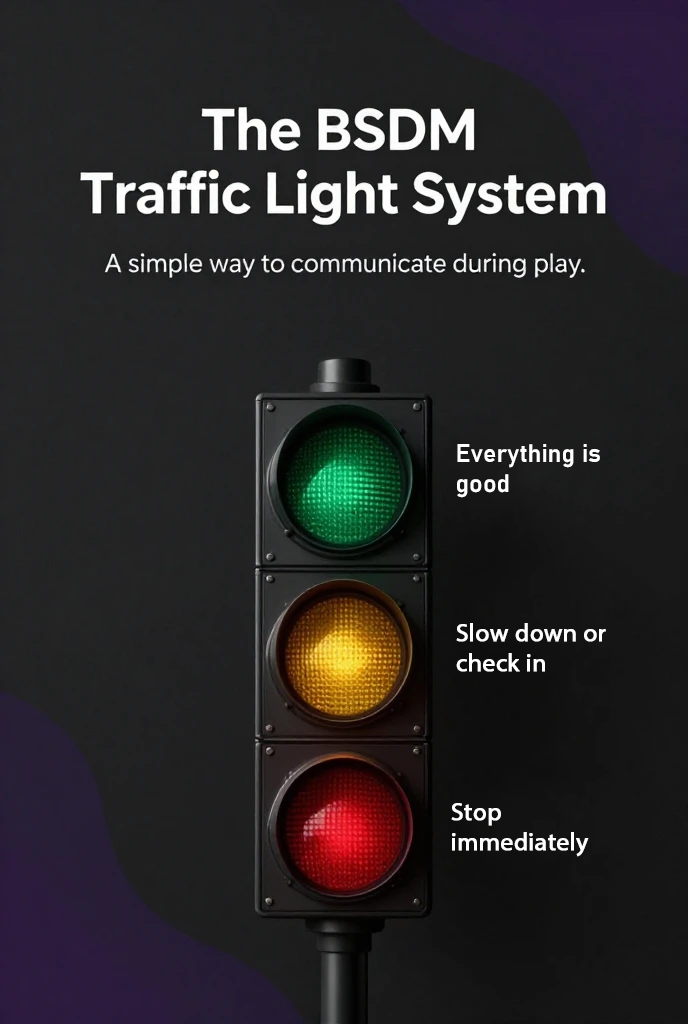
Many couples also use a simple traffic-light system:
- Green = Everything is good
- Yellow = Slow down or check in
- Red = Stop immediately
8. BDSM Is Only About Sex
Some scenes don't involve sex at all.
People may enjoy:
- Power exchange
- Emotional intimacy
- Trust-building
- Service
- Sensory experiences
- Roleplay
For many, BDSM strengthens connection rather than replacing intimacy.
9. Experienced Players Don't Need Rules
The opposite is usually true.
The more experienced someone becomes, the more seriously they tend to take:
- Negotiation
- Risk awareness
- Consent
- Aftercare
- Ongoing education
Knowledge makes scenes safer.

10. Aftercare
Aftercare refers to caring for one another after a scene.
It might include:
- Water
- Blankets
- Cuddling
- Conversation
- Snacks
- Quiet time
- Emotional reassurance
Different people need different types of aftercare, making it an important part of planning any scene.
11. BDSM Is Inherently Dangerous
Every activity carries some level of risk.
Responsible practitioners reduce those risks through:
- Education
- Communication
- Appropriate equipment
- Hygiene
- Regular consent check-ins
- Understanding anatomy
Learning before trying something new is one of the best ways to stay safe.
12. You Must Label Yourself
Many people feel pressure to identify as:
- Dominant
- Submissive
- Switch
- Rope enthusiast
- Sadist
- Masochist
In reality, labels are optional.
Many people simply explore what feels enjoyable and discover their preferences over time.
13. Consent Is a One-Time Conversation
Consent is ongoing.
Someone can change their mind before, during, or after an activity.
Respecting changing boundaries is one of the foundations of ethical kink.

14. BDSM Can't Be Romantic
Many couples discover that kink strengthens emotional intimacy.
Negotiating fantasies, sharing vulnerability, and trusting another person can create deeper emotional connection alongside physical pleasure.
Romance and BDSM often work beautifully together.
15. Beginners Need to Know Everything Before Starting
Nobody starts as an expert.
Everyone was once new.
The best approach is to:
- Learn gradually
- Ask questions
- Start with lower-risk activities
- Communicate honestly
- Respect boundaries
- Keep educating yourself
Confidence comes with experience—not perfection.
Tips for Exploring BDSM Safely
If you're considering trying BDSM for the first time, keep these principles in mind:
- Communicate openly with your partner.
- Agree on clear boundaries.
- Choose an easy-to-remember safe word.
- Research any new activity beforehand.
- Never pressure anyone into participation.
- Check in after every scene.
- Continue learning as your interests develop.
The strongest BDSM experiences are built on mutual trust, respect, and enthusiastic consent.
Explore Kink with Confidence
Whether you're curious about bondage, power exchange, sensory play, or simply looking to deepen intimacy with your partner, education is one of the best tools you can have.
At The Kinksters, we're committed to providing quality products, beginner-friendly guidance, and resources that help people explore safely and confidently. From first-time explorers to experienced enthusiasts, our goal is to help you discover what works for you—at your own pace.
Remember: there's no "right" way to enjoy kink. Communication, consent, and curiosity are the foundations of every great experience.